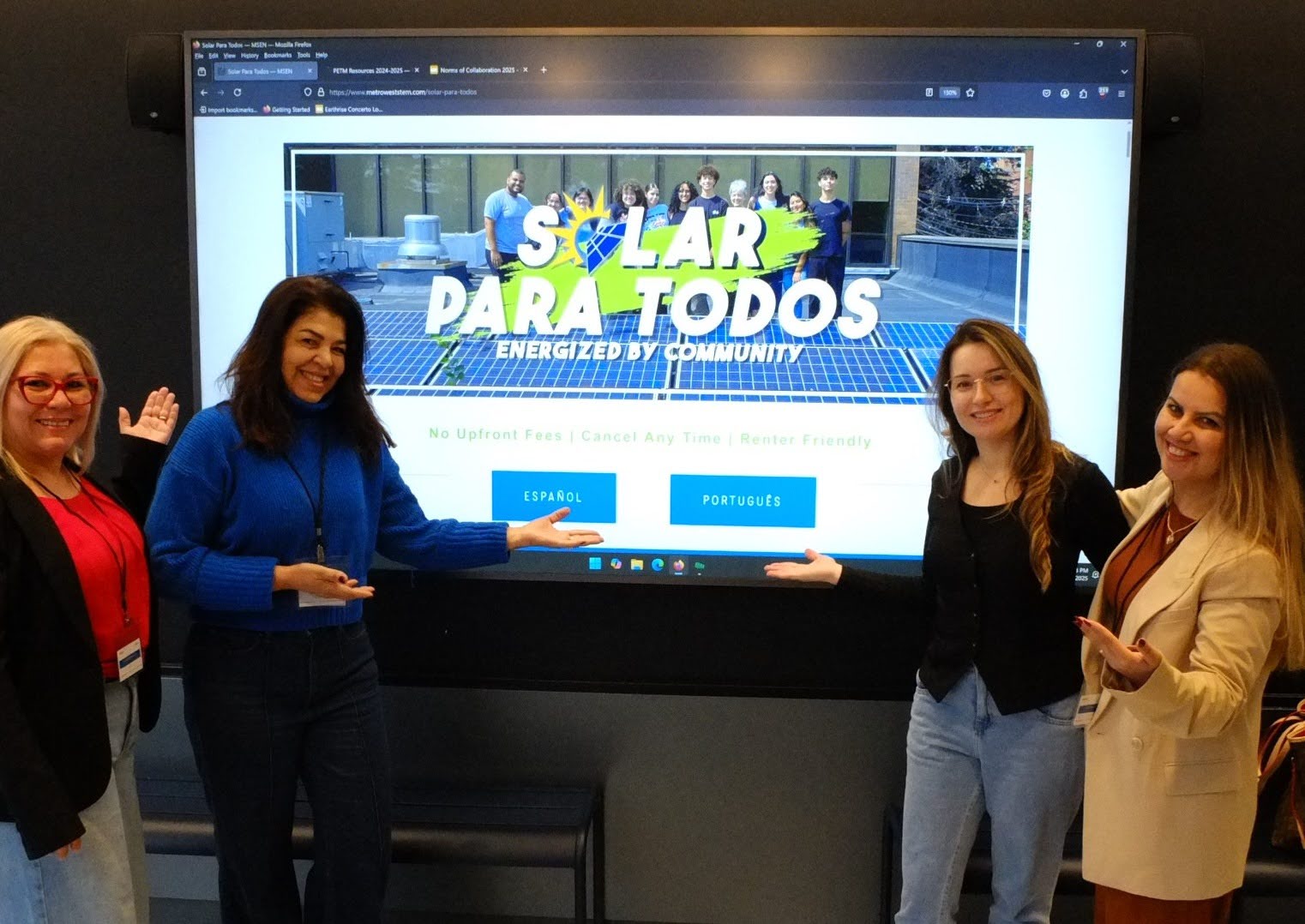
Solar Para Todos (“Solar for All” in Portuguese and Spanish) was a program designed to bring the benefits of solar energy to income-eligible residents of Framingham, MA, with a focus on Portuguese- and Spanish-speaking communities. As the two-year program came to a close, MassEnergize Communications Associate Oceana Ding sat down with Program Manager Fabiane Gonçalves to reflect on its successes, challenges, and lessons learned from two years of community outreach. Here’s what Fabiane had to say.
Q. What was the goal of the program, who was it designed to help, and why was it needed?
Fabiane: The goal of Solar Para Todos (“Solar For All”) was to bring the benefits of clean energy to Framingham residents by helping them enroll in community solar, while building lasting clean energy awareness in the community. It was specifically designed to help low-income, English-isolated Portuguese- and Spanish-speaking immigrant residents of Framingham, many of whom are renters. In Framingham, nearly 87% of the population falls into an Environmental Justice designation.
Existing clean energy programs weren’t reaching these communities. Residents faced language and technology-related barriers to adopting clean energy; for example, the standard process to sign up for community solar was English- and online-only.
Q. What was successful about the program?
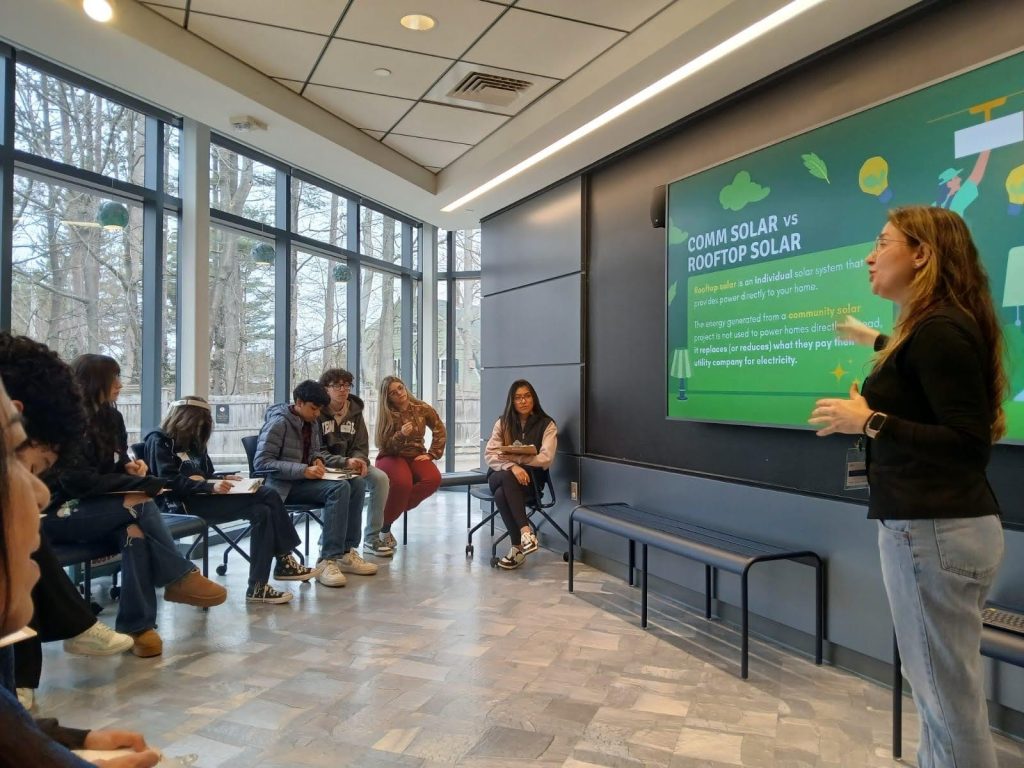
Fabiane: Over two years, the program hired and trained 9 bilingual Energy Ambassadors from the community itself who are now equipped with both outreach skills and clean energy awareness. We engaged 52 local high school students through Framingham State’s Perspectives of Earth – Team Mentorship program who served as clean energy advocates in their own communities, and we reached roughly 5,600 local Portuguese and Spanish speaking residents directly through one-on-one conversations. Community awareness of the benefits of clean energy is now far higher than it was when we began this program.
Q. What were some of the challenges?
Fabiane: The gap between interest in clean solar energy and actual enrollment in our program was our biggest challenge. Most of the people who expressed interest didn’t ultimately sign up, for a wide variety of reasons. Many faced eligibility issues such as income requirements, landlord-paid utilities, or bills that were not in their name. The solar provider’s own enrollment process was also an obstacle: the forms were English-only and document/bank-account heavy, so it worked for tech-savvy subscribers but it was difficult for many immigrant residents. Other things that made our outreach more challenging included the cold weather when people were not venturing outside and a very difficult political climate for immigrant communities who fear mistreatment by authorities.
Q. Which outreach methods worked well?
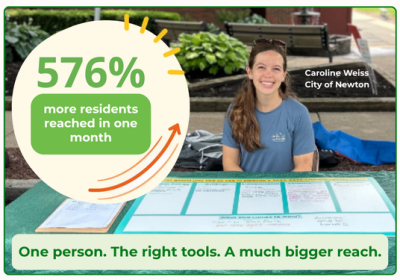
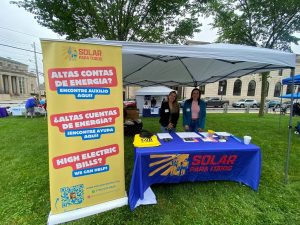
Fabiane: Our biggest success came from hiring trusted community members as solar ambassadors and routing outreach through already-trusted local institutions such as churches, ESL programs, the Brazilian-American Center, or Framingham State University. Consistent, repeated presence in the community — rather than one-off flyering — was what built real trust over time. Peer-led outreach by high school students was also notably effective.
Our partnerships helped multiply our reach far more than trying to go it alone. Sustained, repeated human presence, not only one-off campaigns, is what is needed to build trust with immigrant communities. And creative, hands-on engagement lowers barriers to understanding technical topics like clean energy.
Q. Were there any approaches that didn’t work as expected?
Fabiane: We assumed that a purely digital, self-serve sign-up process would work for the target audience, but what we found more effective was a multi-visit, in-person-supported process. The team also underestimated how long trust-building would take before people were ready to actually enroll.
Q. Is there a story or moment that really sticks with you?
Fabiane: One of the moments that stays with me is realizing that our work goes far beyond helping people lower their energy bills. During in-person events, we often uncovered other challenges that families were facing. Being able to connect residents not only with energy-saving resources but with food pantries, health assistance programs, and services for survivors of domestic violence was incredibly meaningful. It reinforces the idea that trusted community outreach can open doors to support that improves people’s overall well-being.
Q. If you could run the program again, what would you do differently?
Fabiane: I would vet the solar provider’s enrollment process for language and document accessibility before launch, which would have helped us avoid some of the problems we faced after the program had already started. And I would build in a longer runway for trust-building before expecting strong enrollment numbers.